Beware! Beware of scammers and fraud. There are companies using our name unlawfully! Read more about their methods here.

Our sewer services
Our sewer services
Beware! Beware of scammers and fraud. There are companies using our name unlawfully! Read more about their methods here.
Our sewer services
Our sewer services
✓ Deployment of in-house staff
✓ 3-month warranty
✓ Flat rate, no hourly rate
Call us at 085 303 9999
✓ Fixed price
✓ No call-out charges
✓ 3-month warranty

Sewer flies, also known as moth bugs or moth flies, are small insects often found in and around homes. These small but persistent insects can be a major source of annoyance in both homes and businesses. They are often an indication of underlying problems with drains or sewers. Read on and find out how to say goodbye to sewer flies for good!
Go directly to:
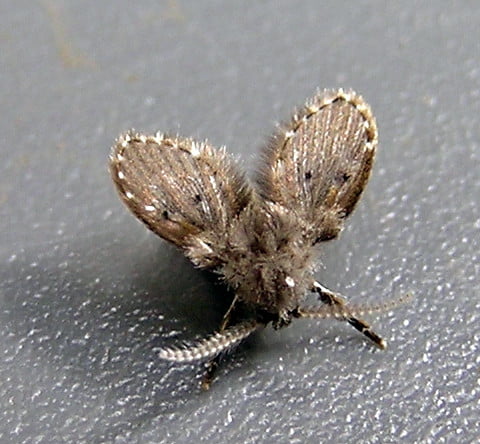
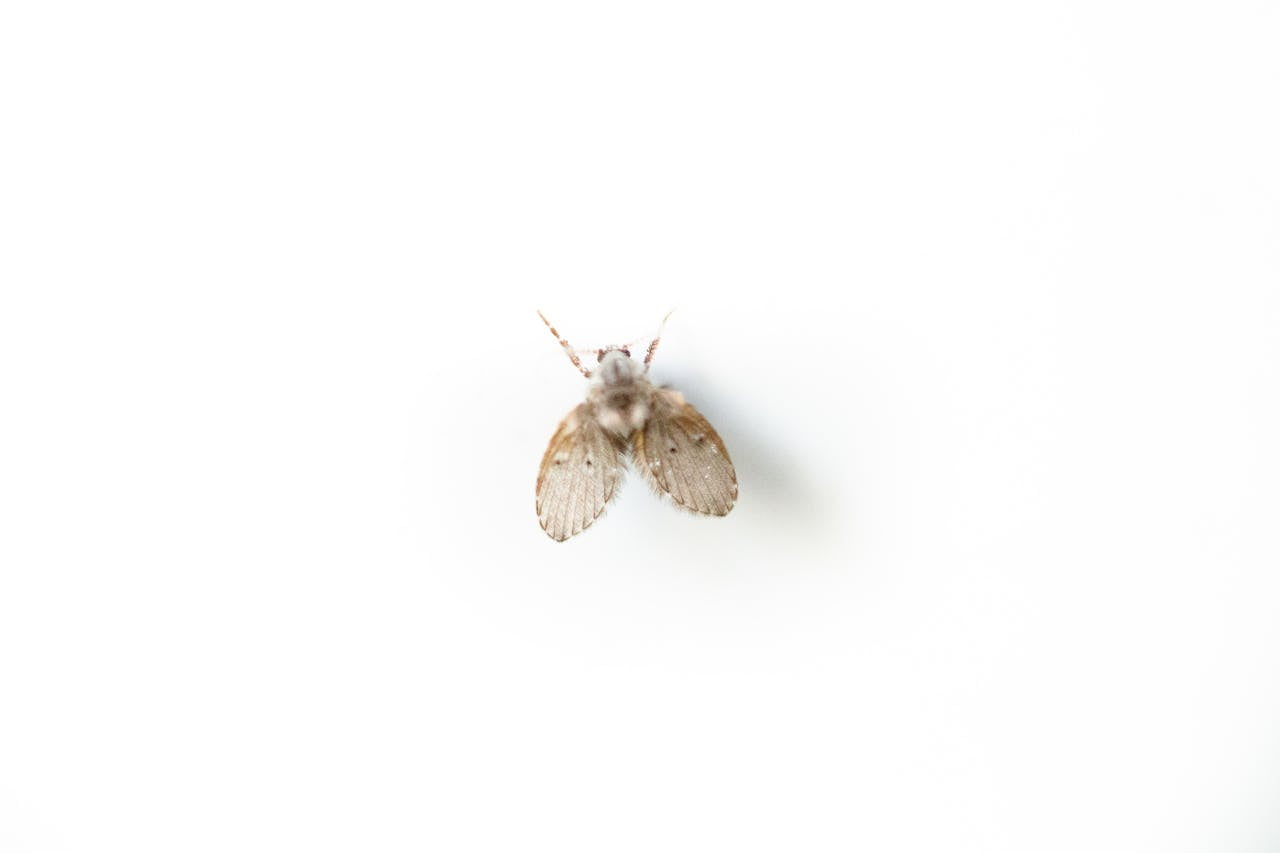
A sewer fly is a species of mosquito. It is also known by other names, such as moth gnat, moth fly or asshole moth. They belong to the family Psychodidae and are known for their hairy wings and moth-like appearance. The adult flies are usually 1.5 to 5 millimeters in size and are gray or light brown in color. They are often seen in damp and dark environments, such as bathrooms, kitchens, and basements.
Sewer flies are primarily attracted to damp and decaying organic materials. They thrive in wet and contaminated environments where organic waste accumulates. This can include:
The most common breeding sites for sewer flies are sewer pipes and drains that are clogged or partially clogged. In addition, sewer breaks that cause undetected leaks can also provide an ideal environment for the development of these flies.
In poorly maintained septic systems, sewer flies can multiply rapidly.
Leftover food and other organic material in clogged sinks can attract moth flies.
Leaks or high humidity in basements and crawl spaces provide an ideal environment for sewer flies to nest.
Leaks or high humidity in basements and crawl spaces provide an ideal environment for sewer flies to nest.
To determine if you are suffering from sewer flies, there are several signs you can look out for. First, you often see small, moth-like flies around drains, sinks, showers and bathtubs. In addition, a strong, unpleasant odor coming from drains and sewers may indicate the presence of organic material that attracts moth flies. You may also find small larvae or pupae near damp areas, such as under sinks or in shower drains. If you regularly have slow-draining water, this may indicate a partial blockage where sewer flies lay their eggs. By recognizing these signs early, you can take quick action to combat a possible infestation.
When the cause of sewer flies is known, such as a burst or blockage, we can immediately proceed with repairs. If the source is unclear, we deploy our smoke detection. For a flat rate, we blow non-toxic smoke through your sewer system to identify all possible cracks and openings where flies could be coming from. This thorough inspection ensures that no problem is overlooked, restoring your sewer system to full functionality.
Our rates are fixed and transparent. Therefore, there are no additional costs, no matter how long the job takes. Therefore, you will not face any unexpected surprises.
Local unblocking
WC, shower, sink, drain, sink, washing machine
Main pipe unblocking
Unblocking by high pressure + camera inspection
Sewer inspection with camera
Checking for problems such as leaks or cracks
Smoke detection sewer system
Locating cause of sewer odor
Smoke detection & camera inspection
Mapping of piping system through smoke detection and camera inspection
Sewer fly control
Professional and thorough approach to drain fly problems
€165 incl. VAT
€296 including VAT
€180 incl. VAT
€180 incl. VAT
€220 including VAT
Upon request
✓ Flat rate, not an hourly rate
✓ 3-month warranty
✓ No call-out fee
✓ Flat rate, not an hourly rate
✓ 3-month warranty
✓ No call-out fee
Surcharges apply for unusual working hours. View working hours and the rates and surcharges applicable to the listed working hours to the right:
Normal rates apply on the following days:
- working days from 08:00 to 18:00
A 50% surcharge applies on the following days:
- working days from 18:00 to 00:00
- Saturday from 08:00 to 18:00
A 100% surcharge applies on the following days:
- all days from 00:00 to 08:00
- Saturday from 18:00 to 00:00
- Sundays and holidays
Recognizing sewer flies is important for quick action. Here are some characteristics of these insects:
The first step in controlling moth flies is thorough cleaning. Make sure all potential breeding sites are cleaned and disinfected:
Use a drain cleaner to remove grease, dirt and organic material from drains. This will eliminate the larvae's breeding sites. Next, improve ventilation in damp areas such as bathrooms and basements to reduce humidity. Clean regularly under appliances such as refrigerators and dishwashers where moisture can accumulate.
Several types of traps can help reduce adult sewer flies. Place glue traps near damp areas and drains to catch the adult flies. You can also fill a bowl with a mixture of water, vinegar, and a few drops of dish soap. This will attract and drown the flies.
Smoke detection is an effective method of detecting problems in the sewer system quickly and accurately. A sewer smoke detection works by using special equipment that injects non-toxic smoke into the entire sewer system. The smoke spreads through the sewer system. Any leaks, holes or improperly connected joints in the system become visible as smoke escapes in those places. The technicians of Rioolbeheer Nederland follow the smoke and inspect the places where it rises to the surface. In most cases, the mechanics can fix it right away. After the inspection, a report is prepared documenting the findings. This report helps in planning possible repairs and improving the sewer system.
In some cases, chemical pesticides may be necessary to control a severe infestation. Use insecticides specifically designed to kill moth flies. Follow label instructions carefully to maximize effectiveness and ensure safety. Specific drain cleaners are also available that not only clean drains but also kill insects hiding in them.
Need help controlling sewer flies? RBNL is here for you. You can count on our fast and friendly service 24/7. Our certified professionals won't leave until your sewer problem is completely resolved. Make an appointment by phone or through our website and hand over your problem worry-free.
Sewer flies? No plumbing job is too big or too small. Contact us today!
Prevent future sewer fly problems by taking some preventive measures after control. Ensure regular maintenance by keeping drains and sewers clean using drain cleaners. In addition, control the humidity in your home by applying proper ventilation and moisture control to make living conditions unfavorable for sewer flies. Finally, repair leaking faucets, pipes and other water sources to reduce damp environments to prevent future infestations.

Your living or working comfort is our priority!
While it is possible to take steps to control sewer flies yourself, calling in a specialist can often be the most effective and sustainable solution. RBNL is your reliable partner for professional moth fly control. Our certified specialists have the knowledge and experience to quickly identify and eliminate the source of infestation. Using advanced techniques and environmentally friendly methods, we ensure that your home is once again free of these pesky insects.
Call us today or schedule an appointment online to solve your sewer fly problem for good. We guarantee a professional and thorough approach, so you can enjoy a clean and hygienic home with peace of mind.
Sewer flies are attracted to moist environments and organic material, such as rotting food and garbage, found in drains and sewers.
Although sewer flies by themselves are not harmful to humans, they can transmit diseases and cause allergic reactions when present in large numbers.
If you see sewer flies, thoroughly clean all drains and check for blockages. It may also help to use drain cleaners to remove organic material.
No, sewer flies do not bite. They are more of a nuisance presence than an immediate danger.
If you are still suffering from sewer flies despite cleaning and preventive measures, it is wise to call in a professional like RBNL for a thorough and effective solution.
The life cycle of a sewer fly, from egg to adult insect, takes about 1 to 3 weeks. Adult sewer flies usually live a few days to a week.
To prevent infestation, it is important to keep drains and sewers clean, repair leaks and minimize damp environments through proper ventilation.
It is recommended that you thoroughly clean your drains at least once a month to prevent the buildup of organic material that attracts moth flies.
Sewer flies will keep coming back if there are still moist and organic-rich environments where they can feed and breed. Ensure thorough cleaning and maintenance to prevent recurrence.

Rioolbeheer Nederland is the specialist for unblocking, cleaning, inspecting and locating sewers, drains and pipes. Your happiness is our goal. Customer satisfaction is our top priority.


Branches
Contact
Tel: 085 303 9999
Address:
Address Amsterdam:
Jacob van Lennepkade 151 H
1054 ZL Amsterdam
Address Utrecht Bilthoven:
PC Staalweg 60
3721 TJ Bilthoven
Email address: info@rbnl.nl
CHAMBER OF COMMERCE: 87133989
Copyright © 2026 – RBNL. All rights reserved.